Driveways That Handle Daily Vehicle Loads
Concrete Driveway Installation in Wichita for crumbling asphalt, rutted gravel, and poor drainage paths
PPJ Construction Inc installs concrete driveways for residential properties throughout Wichita. You need a surface that supports vehicle weight without cracking, channels water away from the foundation, and maintains a clean appearance year after year. The installation process includes excavation, base compaction, reinforcement placement, concrete pouring, and finishing work that determines how the driveway performs under load and weather exposure.
A new concrete driveway replaces surfaces that have settled unevenly, developed potholes, or failed to drain properly. The crew removes existing material, grades the site to direct water toward the street or drainage areas, and compacts a layer of crushed aggregate to create a stable base. Steel rebar or wire mesh is positioned within the pour to resist cracking from temperature changes and ground movement.
If your driveway has deteriorated or you're building new, contact PPJ Construction Inc to schedule a site evaluation and discuss layout options for your Wichita property.
What Goes Into a Durable Driveway Installation
You begin with site preparation, which involves excavating to the required depth, installing proper base material, and ensuring the grade slopes away from the house. The base is compacted in layers using a plate compactor or roller to prevent future settling. Reinforcement is placed on supports called chairs to keep it centered in the slab thickness during the pour.
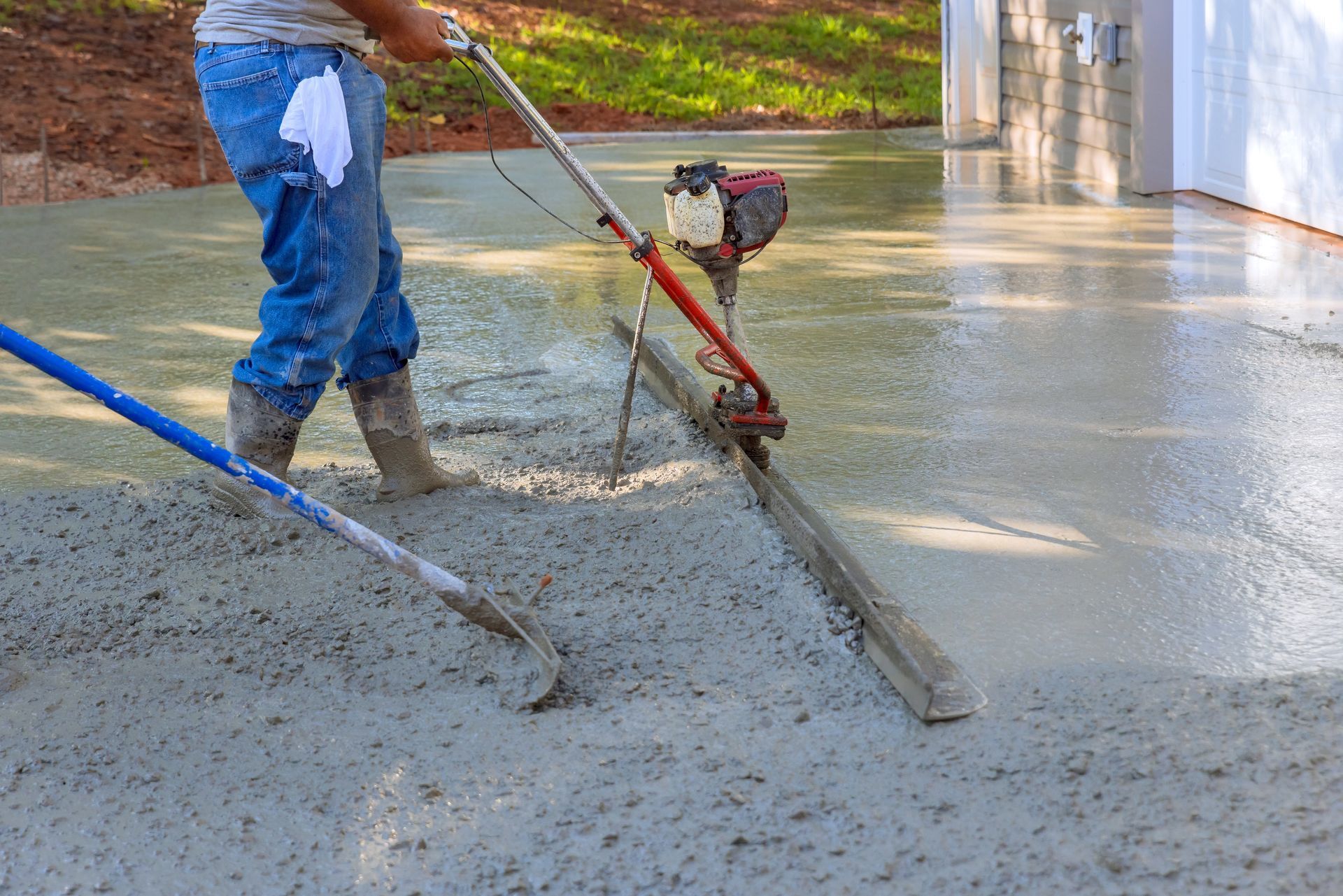
Once the concrete is poured, the surface is screeded level, floated smooth, and finished with a broom texture for traction. You'll notice clean edges along the sides, control joints cut every eight to ten feet to manage cracking, and a consistent slope that moves water off the surface. After curing, the driveway is solid, level, and ready for vehicles.
The entire process takes several days, including excavation, base work, pouring, and initial curing. Decorative finishes or exposed aggregate add visual interest but require additional troweling and surface treatment. The installation does not include removal of landscaping, fence panels, or underground utility marking unless arranged beforehand.
What Homeowners Ask About Concrete Driveways
Driveway installations involve coordination between site work, material delivery, and weather conditions, so it helps to understand what affects the schedule and final result.
How thick should a residential concrete driveway be?
Most driveways are poured at four inches thick for standard vehicles, but heavier trucks or RVs may require six inches with additional reinforcement.
What is the purpose of control joints in a driveway?
Control joints are shallow cuts made in the concrete that guide where cracks form, keeping them straight and less visible rather than allowing random fractures across the surface.
Why does the base need to be compacted before pouring?
Compaction prevents the base from settling after the concrete is in place, which would cause the slab to crack or sink unevenly over time.
When can you drive on a newly poured driveway?
You should wait at least seven days before driving on the surface to allow the concrete to reach sufficient strength, though light foot traffic is safe after a day or two.
How does drainage affect driveway design in Wichita?
Proper slope is essential to move water away from the foundation and prevent pooling, especially during heavy spring rains or snowmelt that can saturate the base.
PPJ Construction Inc plans each driveway installation to match your property layout, vehicle access needs, and site drainage conditions. Reach out to discuss dimensions, reinforcement requirements, and scheduling for your project in Wichita.